
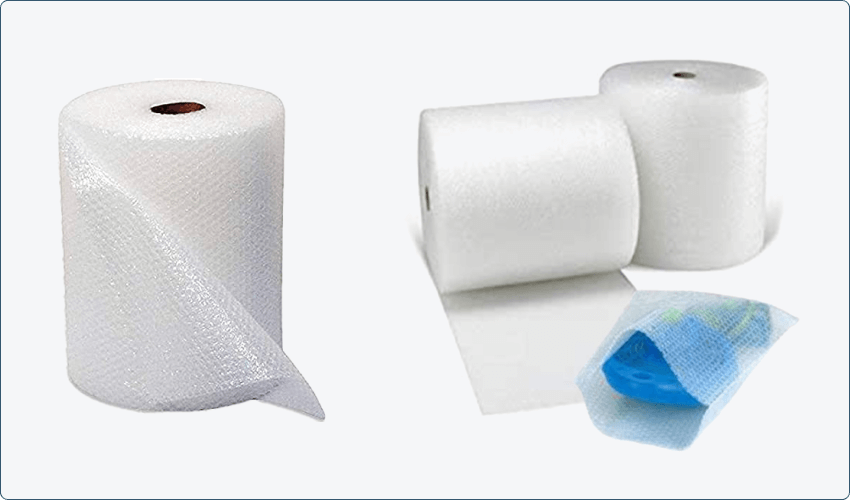
The short answer is yes, but only when it’s the right type, applied correctly, and matched to the weight and fragility of what’s being shipped. Purchase managers who treat bubble wrap as a generic commodity often discover its limitations after a transit damage claim. As an air bubble bag manufacturer in Ahmedabad, Shanti Polymers regularly helps operations and logistics teams understand what air bubble packaging actually does, where it performs well, and where it falls short so buyers can make decisions based on performance rather than habit.
Here is what the evidence and field experience tell us.
How Air Bubble Packaging Works
The protection mechanism is straightforward. Air bubble sheets and bags are made of two or more layers of polyethylene film, one of which is shaped into dome-shaped cells containing air. When the package is hit in transit drop, knock, compression from stacking the air in those cells absorbs and distributes the force over a larger surface area, reducing the peak pressure applied to the product.
This cushioning effect is real and measurable. The variables that determine how well it works are bubble size, film thickness, and the number of layers.
Small bubbles (10mm diameter) provide better surface conformity and are suitable for lighter, irregularly shaped items glassware, instruments, small electronics. Large bubbles (25–28mm diameter) trap more air volume and handle heavier or bulkier items better. Using small-bubble wrap on a 5kg metal component is like using tissue paper for padding the bubble cell volume simply isn’t adequate for the impact energy involved.
Where Bubble Wrap Performs Well in B2B Shipping
For certain product categories and transit conditions, air bubble packaging is genuinely one of the most cost-effective protection options available.
- Light to medium-weight fragile goods: Ceramics, glassware, lighting components, laboratory instruments, and small consumer electronics are well-served by bubble wrapping, provided the wrap is applied in sufficient layers and the outer carton is correctly sized.
- Void fill in oversized cartons: When a product doesn’t fill its shipping box, air bubble sheet crumpled or layered around it prevents movement during transit. This is a legitimate application, though structured foam inserts are more consistent in performance.
- Surface scratch protection: Beyond cushioning, bubble wrap creates a physical barrier between the product surface and the carton wall. For painted or polished components automotive trim parts, decorative hardware this matters even when the weight and fragility don’t require heavy cushioning.
- Short-distance internal movement: Moving components between departments or between supplier and assembly plant over short distances is a practical use case where bubble bags perform reliably without the investment of a full returnable packaging system.
Where It Falls Short and What Buyers Often Miss
Bubble wrap is not a universal solution, and using it outside its performance envelope is one of the more common causes of transit damage that gets misattributed to carrier handling.
- Heavy components: Once you’re shipping items above 3 to 4kg with sharp edges or projections castings, machined metal parts, motor housings bubble wrap alone rarely provides adequate protection. The bubble cells bottom out under load, and the film tears at contact points. Structured EPE foam fitments or moulded inserts handle this category better.
- Stacking loads: Bubble wrap compresses under sustained vertical load. If cartons are stacked four or five high in a truck, the wrap in the bottom boxes may have lost most of its cushioning effect before the consignment arrives. For stack-sensitive shipments, rigid inner packaging is necessary.
- Temperature extremes: Standard polyethylene bubble wrap becomes brittle below 5°C and can deform above 50°C. Shipments going through cold storage or summer truck transit in Rajasthan and Gujarat where container temperatures can exceed 60°C need materials specified for that range.
Practical tip: A simple drop test tells you more than any specification sheet. Wrap your product as you would for actual dispatch, drop the package from a height of one metre onto a hard floor twice once flat, once on a corner. Inspect for any movement or contact damage. If it fails this test in a controlled setting, it will fail in transit.
Matching Bubble Specification to Your Product A Practical Framework
Before placing a bulk order, three questions determine the right specification:
- What is the product weight and fragility rating?
Fragility is expressed as a G-factor the maximum deceleration a product can withstand without damage. Consumer electronics typically tolerate 40–60G. Precision instruments may be rated as low as 15–20G. If your supplier has tested your product, this number should drive the cushioning specification. If not, conservative estimation based on product category is the starting point.
- What transit conditions will the shipment face?
Courier shipments through third-party logistics networks experience more handling events than dedicated transport. A parcel moving through a sortation centre may be dropped, conveyed, and stacked multiple times. Dedicated truck-to-floor delivery is a more controlled environment. The packaging specification should reflect the worst case in your actual distribution channel, not the ideal.
- What is the outer carton doing?
Bubble wrap is inner packaging. The outer carton carries the stacking load and protects against gross impacts. If your carton is undersized, damaged, or made from low-bursting-strength board, the bubble wrap inside cannot compensate. Both layers of the system need to be correctly specified.
Choosing the Right Air Bubble Bag Manufacturer in Ahmedabad
Film thickness, bubble cell uniformity, and seal strength vary between manufacturers more than the price difference suggests. A bubble bag with inconsistent cell formation or a weak heat seal will fail at the worst moment under impact, or when a packer pulls the bag open too quickly under production pressure.
Ask for samples and test them in your actual packing process before committing to volume. Reputable manufacturers will provide technical data on film gauge, bubble diameter, and burst pressure on request.
Why Choose Shanti Polymers?
Shanti Polymers manufactures air bubble bags and rolls in-house at their Ahmedabad facility, with control over film thickness, cell size, and seal quality across each production run. Their team can advise on the right format roll, pre-formed bag, or anti-static variant based on your product dimensions, volume, and transit conditions.
Air bubble packaging works. It works better when the specification is matched deliberately to the product, the transit route, and the outer packaging system around it. The buyers who get the most from it treat it as an engineered solution rather than a commodity purchase.