
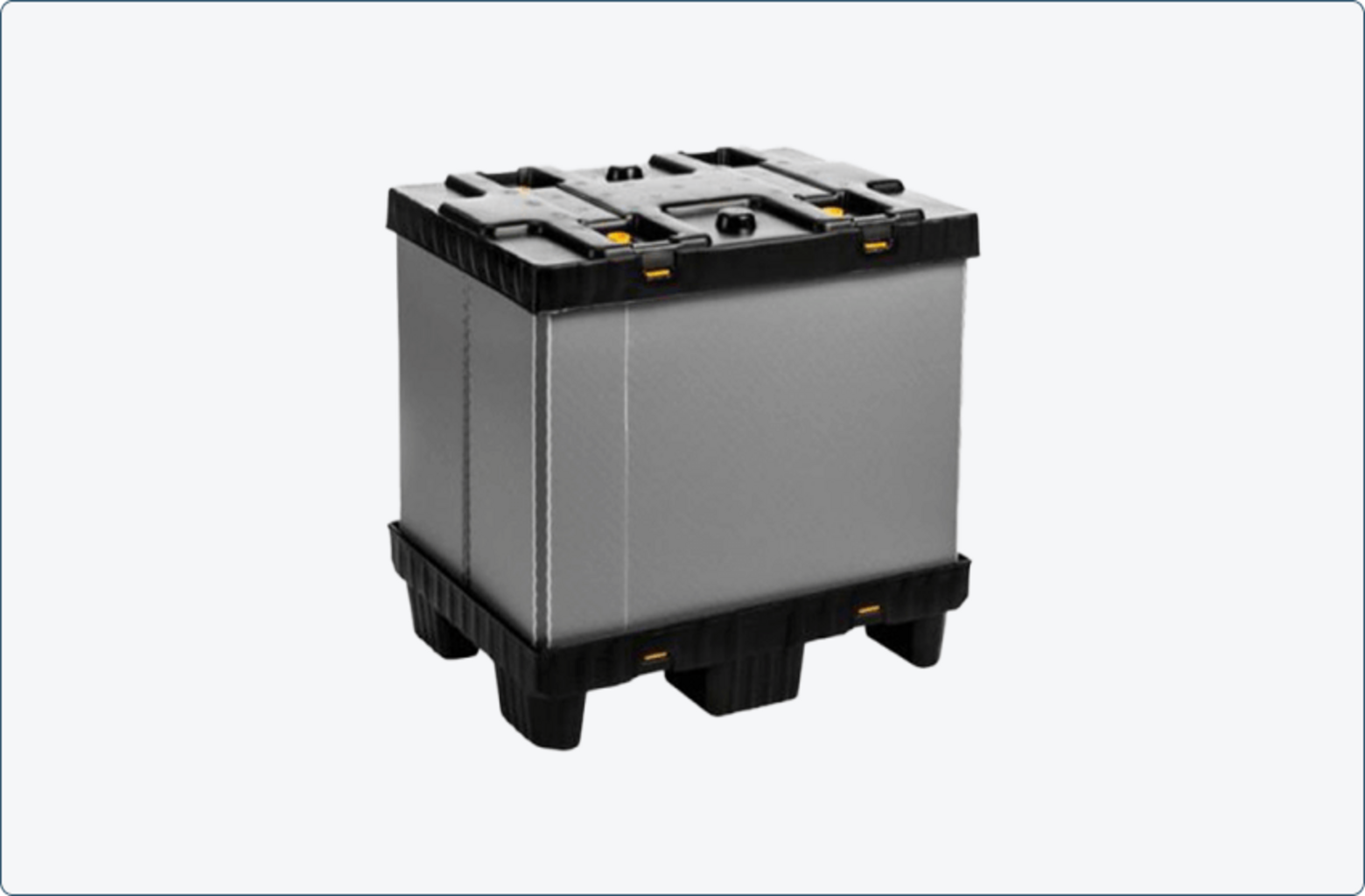
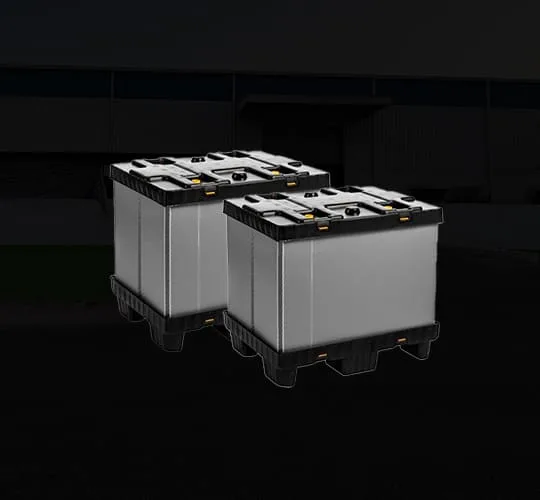
Cold storage packaging fails in ways that room-temperature packaging does not. We started getting questions about FLC boxes for refrigerated environments a few years ago mostly from pharma and food processing units in Gujarat who were dealing with packaging that was not surviving the temperature conditions they were working in.
The question is always some version of the same thing: will FLC boxes actually hold up at 4°C, or at -18°C, or through repeated temperature cycling? The answer depends on how the box is specified. Polypropylene as a material handles cold well. But wall thickness, PP grade, and stacking load all change the outcome significantly.
As an FLC foldable box manufacturer in Ahmedabad, we have supplied cold-chain operations across Gujarat pharma distribution, dairy processing, fresh produce logistics. This guide is based on what we have learned from those applications.
What Actually Happens to Packaging in Cold Storage?
Most packaging failures in cold chain environments come from one of three causes: moisture absorption, brittleness at low temperatures, or structural fatigue from repeated temperature cycling.
Cardboard fails primarily because of moisture. Even with moisture-resistant coatings, corrugated board absorbs condensation over time especially during the transition between cold storage and ambient dispatch areas. Once the board gets soft, compression strength drops sharply, and boxes collapse under load.
Wood pallets and wooden crates have a different problem. They absorb moisture and dry out repeatedly, which leads to cracking, splintering, and dimensional change. In food-grade environments, wood also raises hygiene concerns that are increasingly becoming a compliance issue.
Polypropylene the material used in FLC foldable pallet boxes does not absorb water. Its moisture absorption rate is effectively zero, which is why it is a better starting point for cold storage packaging.
How Does Polypropylene Behave at Low Temperatures?
PP has a glass transition temperature significantly below zero, which means it stays structurally sound at standard cold storage temperatures of 0°C to 8°C. For standard refrigeration applications pharma, dairy, fresh produce FLC boxes perform reliably without any modification.
Deep freeze is a different conversation. At temperatures below -15°C or -20°C, standard PP can become slightly more brittle, particularly under impact. This does not mean it cracks or fails under normal load, but it does mean that dropping a loaded box or applying sudden lateral impact carries more risk than in ambient conditions.
There are PP grades specifically formulated for low-temperature performance, sometimes called “copolymer PP” or “block copolymer PP,” which maintain better impact resistance at sub-zero temperatures. If your application involves deep freeze storage at -18°C to -25°C, this is worth specifying when you order.
The Part Most Buyers Forget Condensation and Foldable Hinge Mechanisms
FLC boxes are foldable, which means they have hinged panels and interlocking mechanisms that allow them to collapse when empty. In cold environments, there is a specific issue that buyers overlook: condensation forming on the hinges and locking tabs when boxes move from cold storage to ambient temperature.
This condensation by itself is not a problem PP does not corrode or swell. But if the locking mechanism relies on tight tolerances, and if boxes are being folded and unfolded many times in an environment where rapid temperature change is constant, the dimensional cycling can eventually affect locking precision.
The practical fix is straightforward. When specifying FLC boxes for cold chain use, ask for reinforced locking tabs rather than standard snap-fit designs, and request a thicker wall section typically 4mm to 6mm twin-wall rather than the standard 3mm used for ambient applications. This adds minimal cost but significantly extends the service life in temperature-variable environments.
Stacking in Cold Storage What Load Calculations Actually Look Like
Cold storage facilities are typically height-optimised. Racks go high, and the compressive load on bottom tier boxes can be substantial. A standard FLC box with 4mm PP twin-wall can typically handle 200 to 400 kg of stacking load in ambient conditions. In a cold environment, if the material is standard PP and temperatures are at or below -15°C, you should reduce the rated load by 15 to 20 percent as a conservative estimate.
This is not a theoretical concern. We have seen buyers spec FLC boxes on paper load ratings, install them in cold storage without adjustment, and then find bottom-tier boxes under load showing stress creasing after a few months.
Three things to tell your FLC box manufacturer before ordering for cold chain: your storage temperature, your maximum stacking height or load per tier, and whether the boxes will be subject to impact during loading. With those three inputs, a manufacturer can give you the right wall specification instead of a generic catalogue size.
Why Choose Shanti Polymers?
Shanti Polymers FLC foldable box manufacturer in Ahmedabad with in-house production covering sheet extrusion, CNC cutting, and assembly. Our team has supplied cold-chain specific FLC boxes to food processing units and pharma distributors in Gujarat, including clients in Bavla, Changodar, and Kathwada GIDC. When a buyer needs a specific wall thickness or a cold-grade PP specification, we work from the material up not just from a standard catalogue.
Before You Order FLC Boxes for Cold Storage, Ask These Three Questions
Cold chain packaging is not the place to find out that the specification was wrong. Before you raise a purchase order, ask your supplier these three things: what PP grade are you using, what is the rated compressive load at -10°C or below, and can I have a sample tested before bulk production?
A manufacturer who can answer all three without hesitation is one who understands what you are asking for. One who redirects you to a brochure probably does not.