
A cracked instrument panel. A scratched automotive trim piece. A shipment of glassware that arrives with three units broken. Each of these incidents has a cost that goes beyond the damaged item itself replacement production, re-delivery, customer communication, and the harder-to-measure cost of a supplier relationship that takes a hit every time it happens.
In most cases, the cause traces back to something preventable. Either the product wasn’t wrapped at all, it was wrapped in material that wasn’t matched to the product weight or transit distance, or the wrapping was inconsistent between operators on a busy packing line. As an air bubble bag manufacturer in Ahmedabad, Shanti Polymers works with purchase managers and warehouse heads across Gujarat who are dealing with exactly this problem and protective packaging rolls are consistently where the fix begins.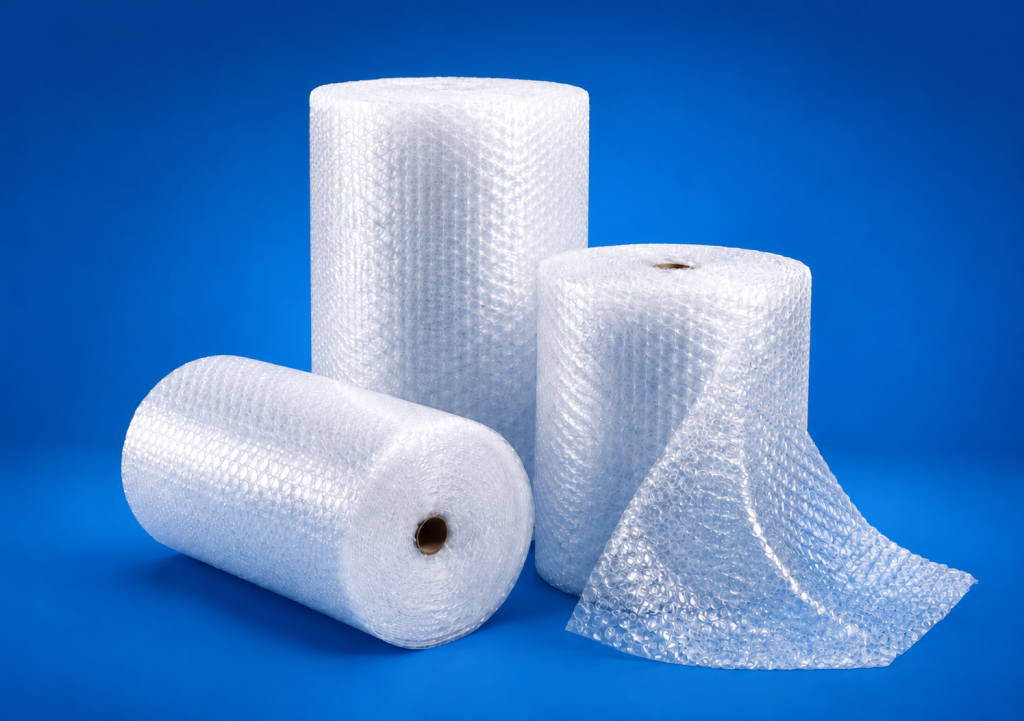
What Protective Packaging Rolls Actually Do
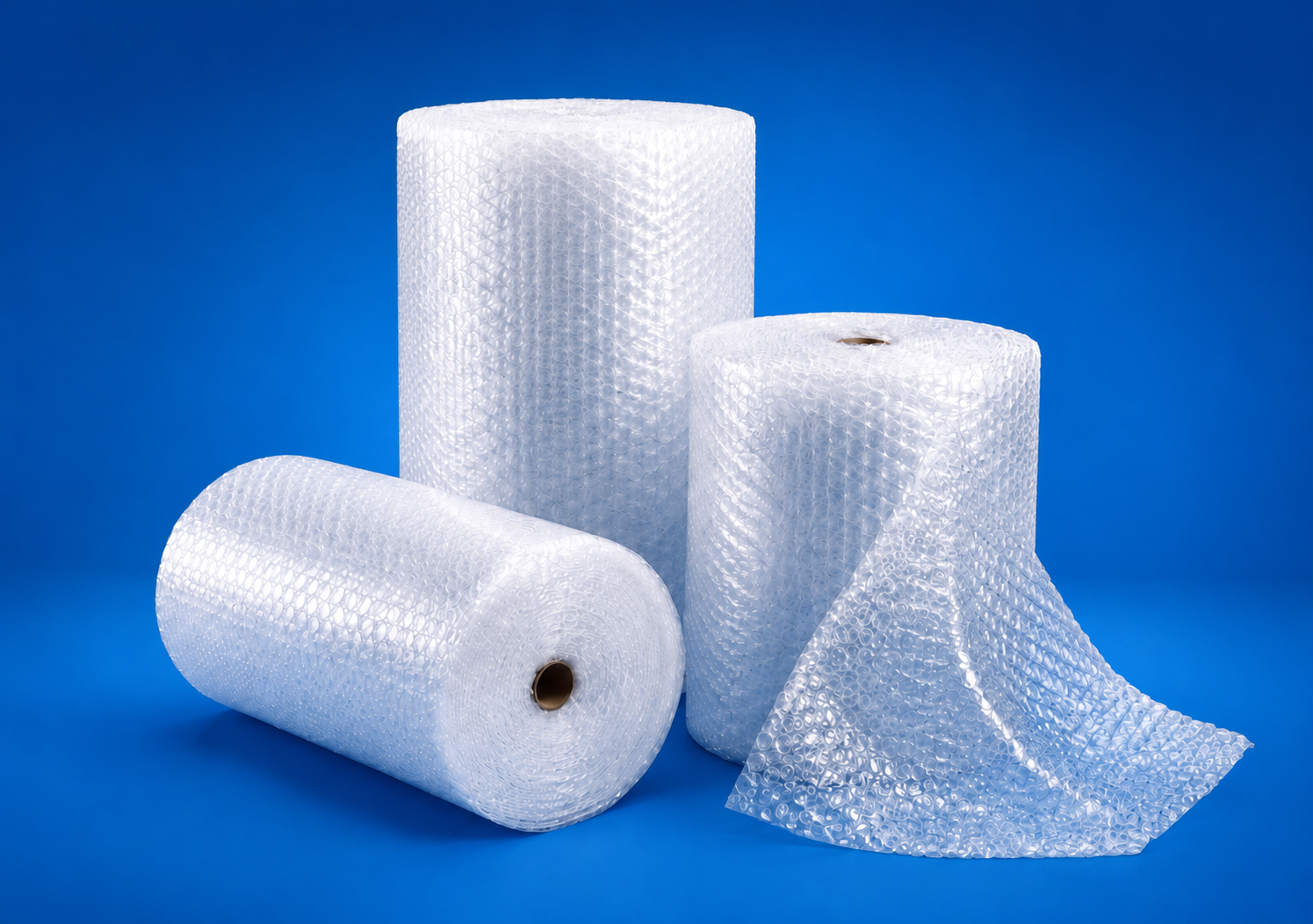
The term “protective packaging rolls” covers a specific category of material rolls of cushioning film that can be cut to length at the workstation and wrapped around a product before it goes into an outer box or carton. The two most common types in industrial packaging are air bubble rolls and EPE foam rolls.
Both work on the same principle: creating a layer of compressible material between the product surface and everything around it. When an impact occurs a drop, a knock from adjacent boxes, vibration over a long road transit that compressible layer absorbs and distributes the force rather than concentrating it on the product surface.
The difference between the two materials is in how they achieve this and which products they protect best. Air bubble rolls trap air in sealed polyethylene cells. EPE foam rolls use a closed-cell expanded polyethylene structure. Knowing which one your product needs is the first specification decision worth getting right.
Air Bubble Rolls vs EPE Foam Rolls Which One Does Your Product Need
This is the question that comes up most often when a factory is reviewing its packaging after a damage incident. The answer depends on product weight, surface sensitivity, and transit conditions.
Air bubble rolls are better suited for:
- Lightweight products where surface scratch protection matters more than heavy cushioning glassware, ceramic tiles, decorative panels, precision instruments
- Products being shipped via courier or third-party logistics where handling events are frequent and unpredictable
- Short to medium transit distances where sustained compression load is not a factor
- Void fill in oversized cartons where the bubble sheet prevents product movement without adding significant weight
EPE foam rolls are better suited for:
- Heavier components where the cushioning material needs to hold up under load machined parts, motor housings, auto components
- Products with polished, painted, or anodised surfaces that need soft, non-abrasive contact
- Repeated use across multiple transit cycles EPE recovers its shape after compression, bubble wrap does not
- Long-term storage applications where sustained contact with the product surface is a concern
The Bubble Size Decision Nobody Explains Clearly
Most buyers order bubble wrap without specifying bubble size they take what their supplier stocks, which is usually 10mm small-cell. That works for a lot of applications. But it’s worth understanding what small and large bubble sizes actually do differently.
Small bubble (10mm diameter):
- Better surface conformity the wrap sits closer to the product surface and provides more even contact
- Better for irregularly shaped products where the wrap needs to follow contours
- Lower per-cell air volume less cushioning against heavy impacts
- Standard specification for most lightweight B2B packaging applications
Large bubble (25–28mm diameter):
- More air volume per cell meaningfully better at absorbing impact energy from drops and knocks
- Less conforming to surface detail better for larger flat-sided products than irregular shapes
- Used in automotive, appliance, and larger consumer goods packaging where impact protection is the primary requirement
Where Protective Packaging Rolls Fail And Why It Happens
Protective packaging rolls are not a universal solution, and using them outside their performance range is one of the most common causes of transit damage that gets misattributed to the carrier.
The most common failure modes:
- Under-wrapping under time pressure
On busy packing lines, operators tend to reduce wrap layers when volume picks up. A product that should receive three layers of bubble wrap gets one. The packaging looks the same from the outside, and nobody catches it until a damage claim comes back. The fix is a standard operating procedure with a minimum wrap count posted at every packing station not a materials change. - Specifying by price rather than application
Thin-gauge bubble wrap (20 micron film) costs less per metre than standard gauge (40–50 micron). On low-risk applications, this is a reasonable trade-off. On fragile or high-value products, the thinner film tears at corners and edges during handling, removing the protection entirely before the product even reaches the carrier. - Stacking load compression
Bubble wrap compresses under sustained vertical load. If your cartons are stacked four or five high in a delivery vehicle or warehouse, the bubble wrap in the bottom boxes may have lost most of its cushioning by the time the consignment is delivered. For stack-sensitive shipments, structured inner packaging an EPE foam fitment or moulded insert handles the vertical load better than wrap alone.
Choosing the Right Roll Width for Your Packing Line
Roll width is a specification detail that has a direct impact on material waste and packing speed two things that matter to operations heads.
The right width is determined by your largest product’s widest dimension, plus enough excess for overlap and securing. As a working guide:
- Products up to 200mm wide → 300–400mm roll width
- Products up to 400mm wide → 500–600mm roll width
- Products up to 700mm wide → 800–1000mm roll width
- Products wider than 700mm → 1200mm+ or consider dual-roll wrapping
Ordering a roll width that’s too narrow forces operators to double-wrap from two separate rolls to achieve coverage, which slows the line and creates inconsistent seams. Too wide wastes material and makes the roll awkward to handle at the workstation.
Protective Packaging in Gujarat’s Industrial Context
Factories across Ahmedabad’s Naroda, Vatva, and Changodar GIDC clusters and across Vadodara’s Savli and Makarpura industrial areas ship goods through a mix of dedicated transport and third-party logistics networks. The transit conditions vary significantly, and packaging specifications that work for a dedicated vehicle delivery to a fixed client often fail when the same product goes through a multi-stop courier network.
Gujarat’s monsoon months also add a moisture variable that most packaging reviews don’t address until it causes a problem. Both air bubble rolls and EPE foam rolls are polyethylene-based and moisture-resistant they don’t absorb water the way cardboard does. For seasonal packaging reviews, this is worth building into the specification rationale.
Why Choose Shanti Polymers?
Shanti Polymers manufactures air bubble rolls, bubble bags, and EPE foam products in-house at their Ahmedabad facility, with control over film gauge, bubble size, and seal quality across each production run. As a direct air bubble bag manufacturer in Ahmedabad, their team can advise on roll width, bubble specification, and the right format roll, pre-formed bag, or multi-layer sheet based on your product dimensions and transit conditions.
Transit damage is not always the carrier’s fault and it’s rarely bad luck. Most of it is a specification problem that can be diagnosed and fixed with the right material choice and a consistent packing process. Protective packaging rolls are where that fix most often starts.
Contact Shanti Polymers at for a free quote and sample roll for your production line.