
If you manufacture electronics, PCBs, sensors, or any precision component, you already know the damage that poor packaging causes. A cracked circuit board or a bent connector discovered after transit is not just a quality issue it is a customer relationship problem, a warranty cost, and sometimes a lost order.
EPE foam fitments are one of the most reliable solutions to this problem. As a leading EPE foam fitment manufacturer in Ahmedabad, Shanti Polymers has worked with hundreds of electronics and precision manufacturing units across Gujarat and this guide covers everything your purchase or operations team needs to know before sourcing foam fitments.
What Are EPE Foam Fitments and How Are They Different from Standard Foam?
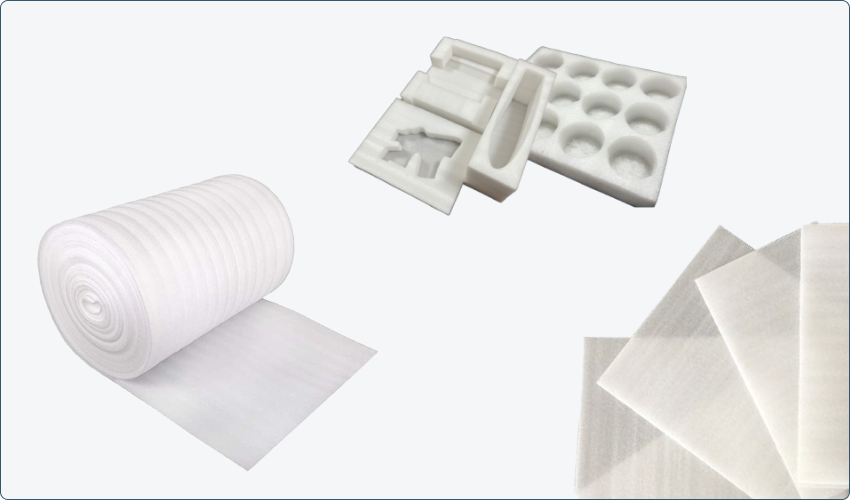
EPE stands for Expanded Polyethylene. Unlike a generic foam sheet cut to size, a foam fitment is a custom-shaped insert die-cut or CNC-routed designed specifically to hold your product in a fixed position inside a box.
The difference matters more than most buyers realise. A loose EPE sheet absorbs some shock, but it allows the product to shift during transit. A properly designed fitment cradles the component, prevents movement in all directions, and distributes impact force evenly across the foam body. For sensitive electronics, that difference can determine whether a shipment arrives intact.
Fitments are made in varying densities typically 18 to 35 kg/m³ and can be produced in single-layer or multi-cavity configurations depending on how many units you are packing per box.
Which Electronics Products Actually Need Custom Foam Fitments?
Not every product requires custom fitments, but the following categories almost always benefit from them:
- Printed Circuit Boards (PCBs): especially multi-layer boards with protruding components
- Motor control units and inverters: used in industrial machinery and EVs
- Sensors and measuring instruments: supplied to automotive or pharma plants
- Power electronics modules: IGBTs, drives, and converters
- Transformers and coils: with fragile winding structures
- Lighting fixtures and LED modules: exported by Gujarat-based manufacturers
If your product has protruding parts, is irregularly shaped, or weighs more than 500 grams, a generic foam pad is unlikely to provide adequate protection in courier or transport conditions.
Why Single Cavity vs Multi-Cavity Fitments Which is Right for Your Line?
- Single cavity fitments hold one product per box. Multi-cavity designs allow you to pack 4, 6, 8, or more units in a single corrugated box. The choice depends on your product size, production volume, and how your warehouse operates.
- Multi-cavity fitments are typically more cost-efficient per unit the foam cost per piece drops as cavity count increases. However, they require a larger corrugated box, and if one unit in the set is rejected at QC, the entire pack is disrupted.
- For export consignments where box dimensions are tightly controlled by shipping lines, single-cavity fitments often make more operational sense. For domestic distribution in bulk quantities, multi-cavity layouts typically reduce both material and labour costs.
ESD Foam vs Standard EPE Foam When Does Your Electronics Packaging Need Antistatic Protection?
This is a question many buyers skip and it leads to silent product failures that are difficult to trace.
Standard white EPE foam is electrostatically neutral, not antistatic. For components sensitive to electrostatic discharge (ESD) such as MOSFET transistors, microcontrollers, and bare PCBs a static charge built up during packaging, transit, or unpacking can damage the component without leaving any visible mark.
Pink or black ESD foam (technically EPE with a conductive additive) is the correct choice for these components. The surface resistance of ESD foam is typically in the 10⁶ – 10¹¹ ohm range, which dissipates static charge safely.
Practical tip: If your product is already packed in an antistatic bag, you can use standard EPE foam for the fitment. The bag provides the ESD barrier. If your product is bare no bag the fitment itself should be ESD-grade foam.
Why Choose Shanti Polymers?
Shanti Polymers has supplied EPE foam fitments in Ahmedabad, to electronics, automotive, and precision instrument manufacturers across Gujarat for over a decade. We manufacture in-house in Ahmedabad, which means faster sampling, tighter quality control, and no middleman margin whether you are ordering 500 pieces or 50,000.
Get the Right Fitment for Your Product
The right foam fitment is not expensive but getting it wrong is. A rejected shipment, a damaged component, or a customer complaint costs far more than the difference between standard foam and a properly engineered fitment.
If your electronics packaging currently relies on cut foam sheets or generic inserts, it is worth spending three minutes to discuss your requirement with a specialist.
Contact Shanti Polymers for a free quote and prototype sample.