
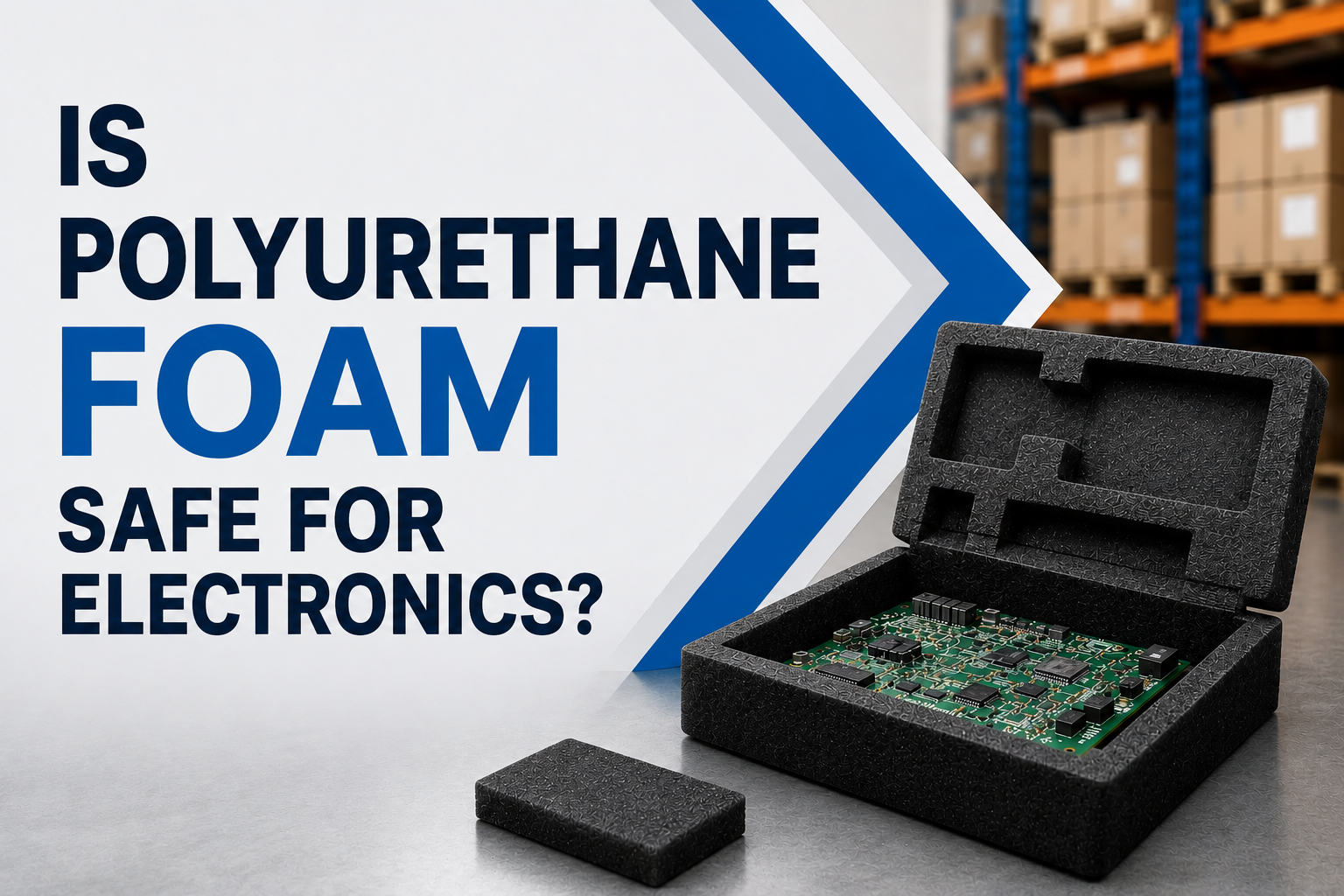
Here is a question that most purchase managers never ask until something has already gone wrong. A batch of printed circuit boards arrives at the customer’s facility. They pass incoming inspection. They go into assembly. Weeks later, field failures start coming back with corrosion patterns that nobody can explain no moisture exposure, no visible contamination, nothing obvious in the supply chain audit.
The investigation eventually points to the foam. Specifically, to a type of polyurethane foam supplier India that contains amine-based catalysts compounds that off-gas in enclosed packaging environments and deposit a thin film of contamination on metal contacts and solder joints. The foam looked fine. It felt protective. It was doing damage the entire time.
This is not a hypothetical. It is a documented failure mode in electronics packaging, and it occurs more often than quality reports reflect because the root cause is rarely identified correctly. Before specifying PU foam for any electronic component application, understanding what polyurethane foam actually contains and how it behaves in contact with sensitive surfaces is worth the time.
What Polyurethane Foam Actually Is
Polyurethane foam is produced by reacting two chemicals a polyol and an isocyanate in the presence of catalysts, surfactants, and blowing agents. The resulting foam can be soft and flexible (used in furniture and mattresses) or firm and rigid (used in insulation and packaging die-cuts).
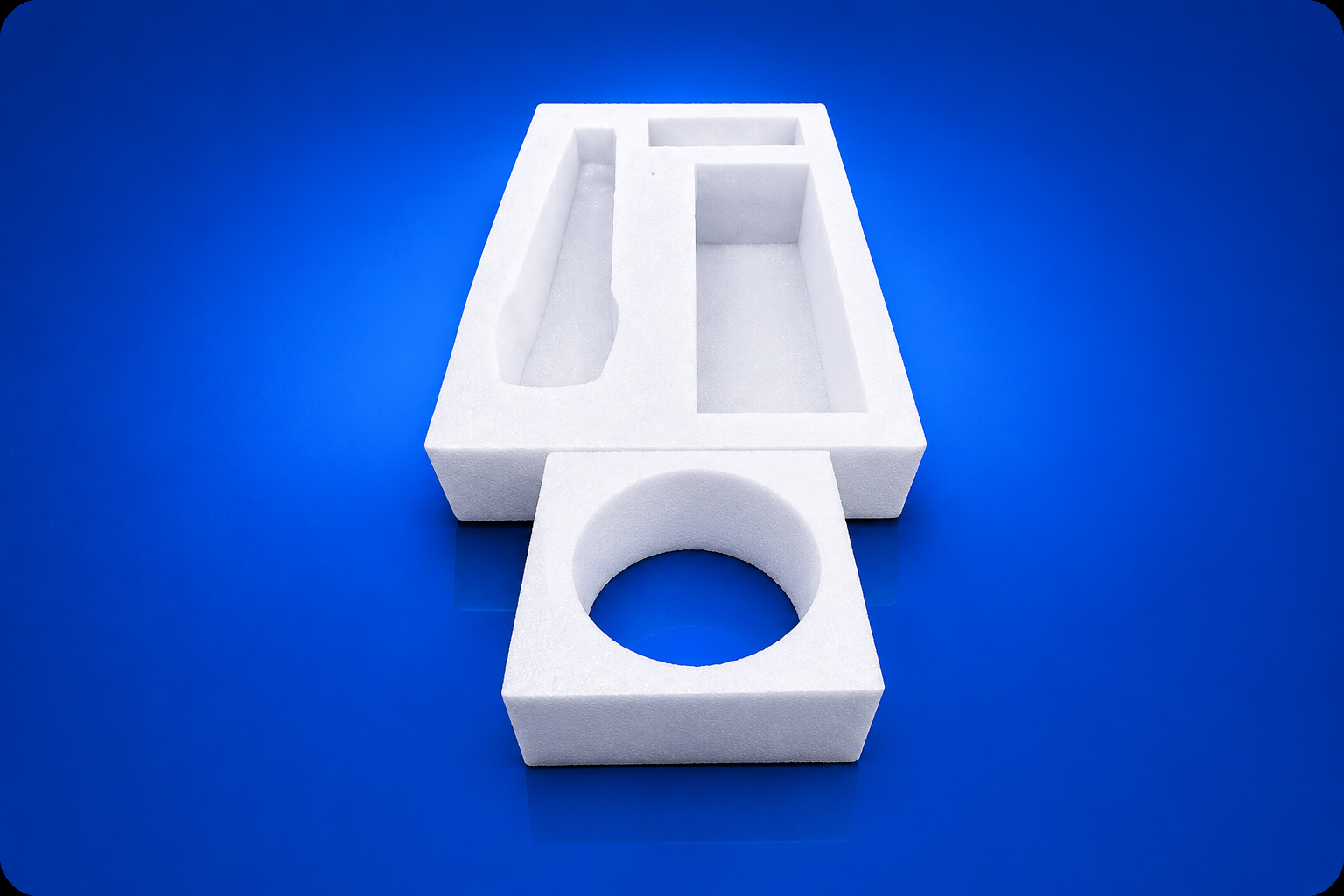
For industrial packaging, the rigid and semi-rigid PU foam manufacturer Ahmedabad formats are most relevant. These are cut to shape, moulded into specific cavities, or laminated to create custom protective inserts for instrument cases, tool kits, and high-value component packaging.
The chemistry that makes PU foam useful its density, firmness, and shape retention is also what creates the safety question for electronics. The residual catalysts and additives used during manufacture do not all stay locked inside the foam matrix. Some migrate to the surface over time, particularly in warm, enclosed environments.
The Specific Safety Concern for Electronic Components
The electronics industry has a well-established term for this problem: corrosive outgassing. It refers to volatile compounds released by packaging materials that attack metal surfaces, solder joints, connector pins, and PCB traces.
Polyurethane foam particularly open-cell formulations and those manufactured with amine catalysts is one of the known contributors to this failure mode. The compounds involved react with atmospheric moisture to form deposits on contact surfaces. These deposits increase contact resistance, cause intermittent connectivity failures, and in some cases cause visible corrosion that triggers warranty claims and field replacement.
The risk is highest when:
- Electronic components are stored in sealed packaging for extended periods
- The storage environment is warm or humid
- The foam is in direct contact with exposed metal surfaces, connector pins, or solder joints
- The foam is a generic formulation rather than one specifically developed for electronics packaging
This does not mean PU foam cannot be used near electronics at all. It means the formulation and application matter enormously, and a generic furniture-grade or insulation-grade PU foam should never be specified for direct-contact electronics packaging without confirmation of its outgassing behaviour.
When PU Foam Is Safe for Electronics Use
The distinction that resolves most of the confusion is between direct-contact and indirect-contact applications.
Safe indirect-contact applications:
- Outer cushioning layers where the foam does not touch exposed component surfaces
- Instrument case lids and outer panels where the component is enclosed in its own housing
- Shock absorption layers beneath a primary packaging tray that holds the component separately
- Tool kit organisation where metal tools are the contact surface (metals are far less sensitive to amine outgassing than solder joints or PCB traces)
Higher-risk direct-contact applications:
- Bare PCBs resting directly against foam surfaces
- Connector assemblies stored in foam cavities for extended periods
- RF components with exposed contact surfaces
- Any component where surface contamination is a field failure mode
For the higher-risk applications, two alternatives are better specified. First, use EPE foam fitments expanded polyethylene foam that is chemically inert, non-outgassing, and widely used for direct-contact electronics packaging across the industry. Second, use ESD-rated foam variants specifically formulated and tested for electronics contact applications.
How to Verify a PU Foam’s Safety for Your Application
If PU foam is the right material for your packaging on other grounds firmness, shape retention, load distribution there are specific checks worth running before committing to a bulk order.
Request an outgassing test report. A responsible PU foam manufacturer in Ahmedabad or anywhere in India should be able to provide test data on volatile compound emission. The relevant standard is IEC 60068-2-60, which tests for corrosive outgassing by exposing metal coupons in a sealed chamber with the foam sample.
Confirm the catalyst system. Ask whether the formulation uses amine-based catalysts or non-migrating reactive catalysts. Non-migrating catalysts are chemically bonded into the foam matrix and do not outgas. This distinction is not always volunteered by suppliers you need to ask specifically.
Specify closed-cell over open-cell. Closed-cell PU foam has significantly lower outgassing rates than open-cell formulations because the cellular structure limits volatile compound migration. For electronics packaging, always specify closed-cell unless there is a specific reason to do otherwise.
Run a contact exposure test. For critical applications, wrap a sample of the foam in direct contact with a representative component or a copper coupon and store at 40°C for 30 days. Inspect for discolouration, increased surface resistance, or visible deposits. This is a simplified version of the IEC test and provides useful early signal before full qualification.
Where PU Foam Genuinely Excels in Industrial Packaging
Away from the direct-contact electronics question, polyurethane foam has real advantages that make it the right choice for specific applications.
Instrument and equipment cases: PU foam die-cuts hold their shape under repeated open-and-close cycles better than EPE foam for precision-fit cavity applications. A calibrated measuring instrument that needs to sit in exactly the same position every time it’s replaced in its case is well served by a firm PU foam insert.
Tool kit organisation: The firmness of PU foam makes it ideal for presenting tools in a readable, accessible layout where each tool has a shaped void cut to its profile. This is purely a mechanical and aesthetic application no outgassing concern is relevant.
Heavy component cushioning in rigid cases: Where a component is heavy and the packaging is a rigid transport case that will be handled aggressively, the compressive strength of PU foam provides better sustained protection than EPE, which can compress and take a set over time under high static load.
Shanti Polymers supplies PU foam die-cut products for instrument cases, tool organisation, and industrial component cushioning from their Ahmedabad manufacturing facility. Their team can advise on formulation selection and whether PU or an alternative foam type is the right specification for your specific application.
Why Choose Shanti Polymers?
Shanti Polymers is a polyurethane foam supplier based in Ahmedabad manufacturing PU foam die-cuts alongside a full range of protective packaging materials including EPE foam, XLPE, EVA, and ESD-rated options. Their team works with purchase managers and engineers to match the foam specification to the actual application including advising when PU foam is not the right choice and an alternative material better serves the requirement.