
Most ESD damage passes QC. That’s what makes it expensive.
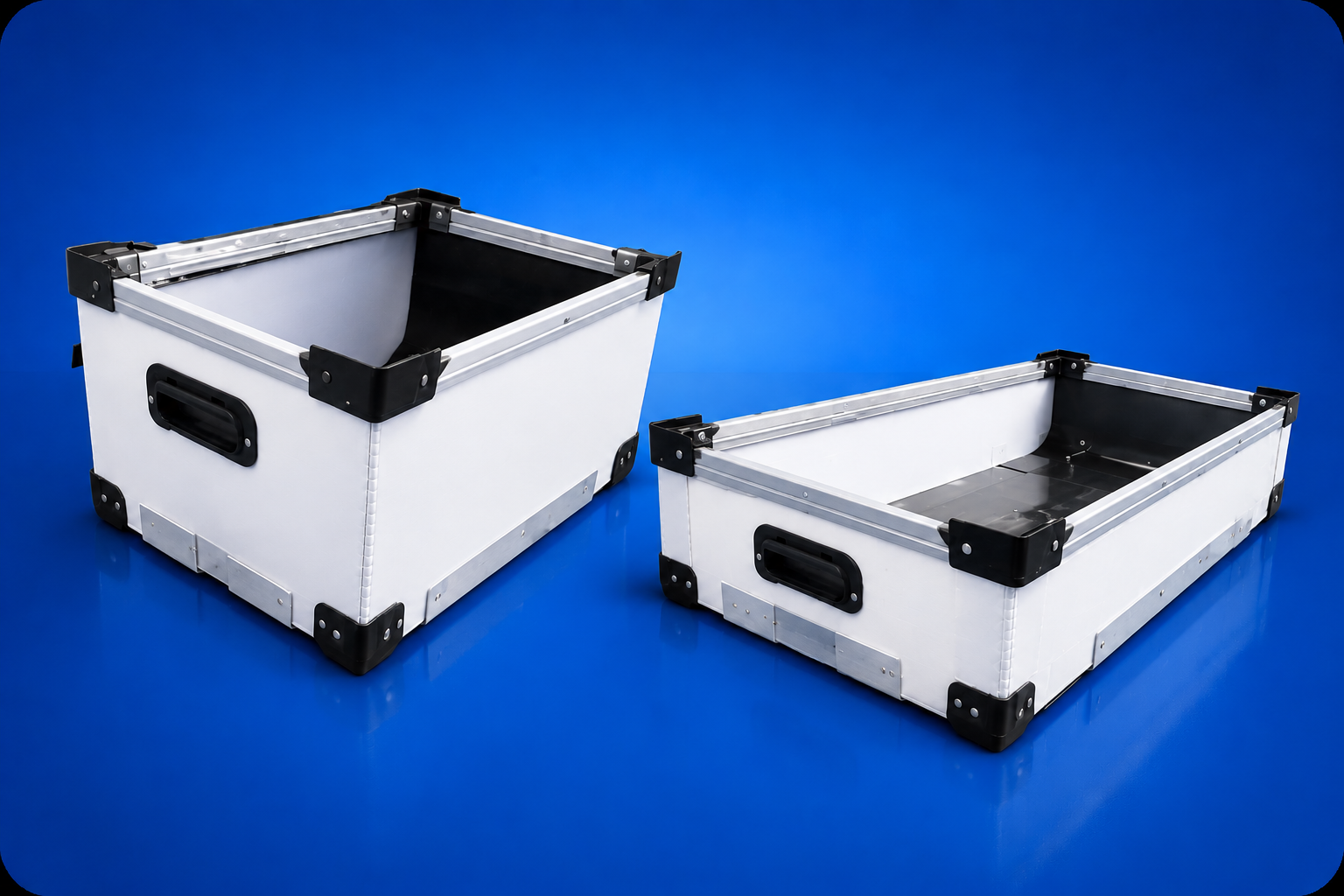
Walk through a well-run factory in Ahmedabad, and you’ll notice something that wasn’t there five years ago rows of PP corrugated bins at every workstation, in the warehouse, on the loading dock. The cardboard boxes that used to sit in those spots are gone. So are the wooden crates in some cases. The shift has happened gradually, plant by plant, driven not by a trend but by a simple calculation that operations heads keep arriving at independently: the old methods cost more over time than the new ones.
As a PP corrugated box and bin manufacturer in Ahmedabad, Shanti Polymers has been part of that shift across automotive, electronics, pharmaceutical, and agricultural manufacturing in Gujarat. The reasons factories make the switch are consistent and they’re worth understanding properly before your next storage or packaging review.
What “Old Storage Methods” Actually Means in This Context
Before getting into why PP corrugated bins are winning, it’s worth being clear about what they’re replacing because the comparison isn’t always cardboard versus plastic.
In Gujarat’s manufacturing sector, the storage methods that PP corrugated bins most commonly replace are:
- Single-use cardboard boxes cheap per unit, but require constant reordering, absorb moisture, and collapse under repeated load
- Wooden crates heavy, expensive to repair, splinter risk for both product and operators, difficult to clean to pharmaceutical or food standards
- Fabric bags and cloth sacks widely used in agricultural and textile supply chains, but offer no structural protection and can’t be stacked
- Metal bins and trays durable but heavy, expensive, corrode in humid environments, and can damage component surfaces on contact
PP corrugated bins don’t beat all of these on every measure. Metal bins handle heavier loads. Cardboard costs less per unit upfront. But across the combination of factors that actually matter to an operations manager durability, weight, hygiene, cost per trip, and ease of handling corrugated plastic consistently comes out ahead for most factory applications.
Reason 1:
They Last Significantly Longer Than Cardboard
This is where the economics shift decisively. A single-use cardboard box costs less than a PP corrugated bin when you look at unit price alone. But cardboard is typically used once sometimes twice if it’s handled carefully before it loses structural integrity.
A well-specified PP corrugated bin, used correctly and in the right application, completes 60 to 80 transit cycles before it needs replacement. In a captive supply chain where the same bin travels the same route between supplier and assembler repeatedly, that cycle count translates directly into cost per trip.
Do the arithmetic on your own operation: if a PP bin costs six times a cardboard box but lasts 60 cycles, the per-trip cost is a tenth of what you’re paying for cardboard. The crossover point where corrugated plastic becomes cheaper is usually somewhere between cycle 8 and cycle 12 after that, every additional cycle is pure cost saving.
Reason 2:
Moisture Doesn’t Touch Them
Cardboard and humidity don’t get along. Gujarat’s monsoon season June through September creates the conditions under which cardboard-based storage and transit systems consistently fail. Boxes soften, collapse under stacking load, and absorb moisture that transfers to the product surface or the component inside.
PP corrugated sheet is made from polypropylene a thermoplastic polymer with essentially zero moisture absorption. The twin-wall structure traps air between two solid sheets, and neither the sheet material nor the internal fluting absorbs water under any normal handling condition.
For factories in coastal or high-humidity industrial areas Surat, Ankleshwar, Bharuch this moisture resistance is the single most compelling argument for switching. Damaged goods from packaging failure are most common in Q3 when monsoon conditions peak, and most of those failures trace back to cardboard that couldn’t hold its structure.
Reason 3:
They’re Lighter Than Metal, Stronger Than Cardboard
The weight comparison matters more than it sounds on paper. A metal bin that holds 20 kg of components might itself weigh 8–10 kg meaning a third of the lifting load in your warehouse is the container, not the content. Over a full shift of repeated handling, that extra weight has a direct effect on operator fatigue and injury rate.
PP corrugated bins in the same application typically weigh 1–3 kg depending on wall thickness and size. The strength-to-weight ratio of twin-wall polypropylene is significantly better than cardboard and practically comparable to metal for most factory applications the exceptions being very heavy industrial parts (above 30–40 kg per bin) and high-temperature environments where polypropylene softens.
For the majority of components moved through automotive Tier-1 and Tier-2 supply chains in Gujarat engine parts, stampings, rubber gaskets, electrical sub-assemblies PP corrugated bins are both strong enough and light enough to replace metal without any compromise in protection.
Reason 4:
They Stack Clean and Store Flat
Two practical advantages that get undervalued in specification decisions: stackability and collapsibility.
PP corrugated bins are manufactured to consistent dimensions. When stacked, they sit flush on each other without the lateral shift that cardboard boxes develop as they soften under load. On a 5-high pallet stack in a warehouse, that consistency matters a shifted stack in a narrow aisle is a safety incident.
Collapsible PP bins sometimes called turnover boxes or foldable bins fold flat when empty. A stack of 10 flat bins takes up roughly the same floor space as 2 assembled ones. For return logistics, where empty bins need to travel back from the assembly plant to the component supplier, this dramatically reduces return freight cost. A full delivery truck of flat-packed empty bins on the return leg versus a full truck of assembled empty bins is the difference between one trip and three.
Reason 5:
They Can Be Colour-Coded, Printed, and Customised
This is the advantage that gets the most visible result on the shop floor. Cardboard boxes look the same. Metal bins look the same. A warehouse full of identical containers creates a sorting problem that costs time and creates dispatch errors.
PP corrugated bins are manufactured in a range of colours and can be screen-printed or hot-stamped with part numbers, department codes, destination markers, or barcodes directly on the bin surface. Colour coding by product family, destination, or department is standard in well-run automotive and electronics plants across Gujarat.
The practical result: picking errors drop, mis-routing incidents drop, and new operators orient themselves to the warehouse faster. None of these are dramatic savings individually but across a full year of operation, the cumulative effect on throughput and error rate is measurable.
Choosing the Right PP Corrugated Box and Bin Manufacturer in Ahmedabad
Not all PP corrugated bins perform the same after 30 or 40 cycles. Sheet density, virgin versus recycled PP content, die-cutting accuracy, and fold-line consistency all affect how the bin holds up in actual use.
Before committing to a bulk order from any PP corrugated box and bin manufacturer in Ahmedabad, run a realistic load test on samples. Stack them four high with representative component weights, leave them for 48 hours in ambient conditions, and inspect for wall deformation and hinge stress. What you see in that test is a reasonable preview of how the bin performs after 20 cycles of real handling.
Why Choose Shanti Polymers?
Shanti Polymers manufactures PP corrugated boxes and bins in Ahmedabad facility, with the capability to handle custom dimensions, foam integration, colour specification, and direct printing within a single order. Their team works directly with operations and purchase managers from prototype through to bulk production, which reduces the risk of specification errors reaching the production line.
The shift from cardboard and wood to PP corrugated bins isn’t happening because it’s a trend. It’s happening because the cost-per-cycle arithmetic keeps working out the same way for every factory that runs the numbers carefully.