
A shattered glass panel. A scratched automotive trim piece. A precision instrument that arrives slightly out of calibration. Each of these has a packaging story behind it and in most cases, the problem wasn’t that bubble wrap was used. It was that the wrong bubble wrap was used.
Most buyers treat bubble wrap as a commodity. Same product, different rolls, pick the cheapest. But there are real differences in bubble size, film gauge, and format that determine whether your product arrives intact or generates a damage claim. As an established air bubble bag manufacturer in Ahmedabad, Shanti Polymers works with purchase managers across Gujarat who make this specification decision regularly and the same mistakes come up repeatedly.
Here is how to avoid them.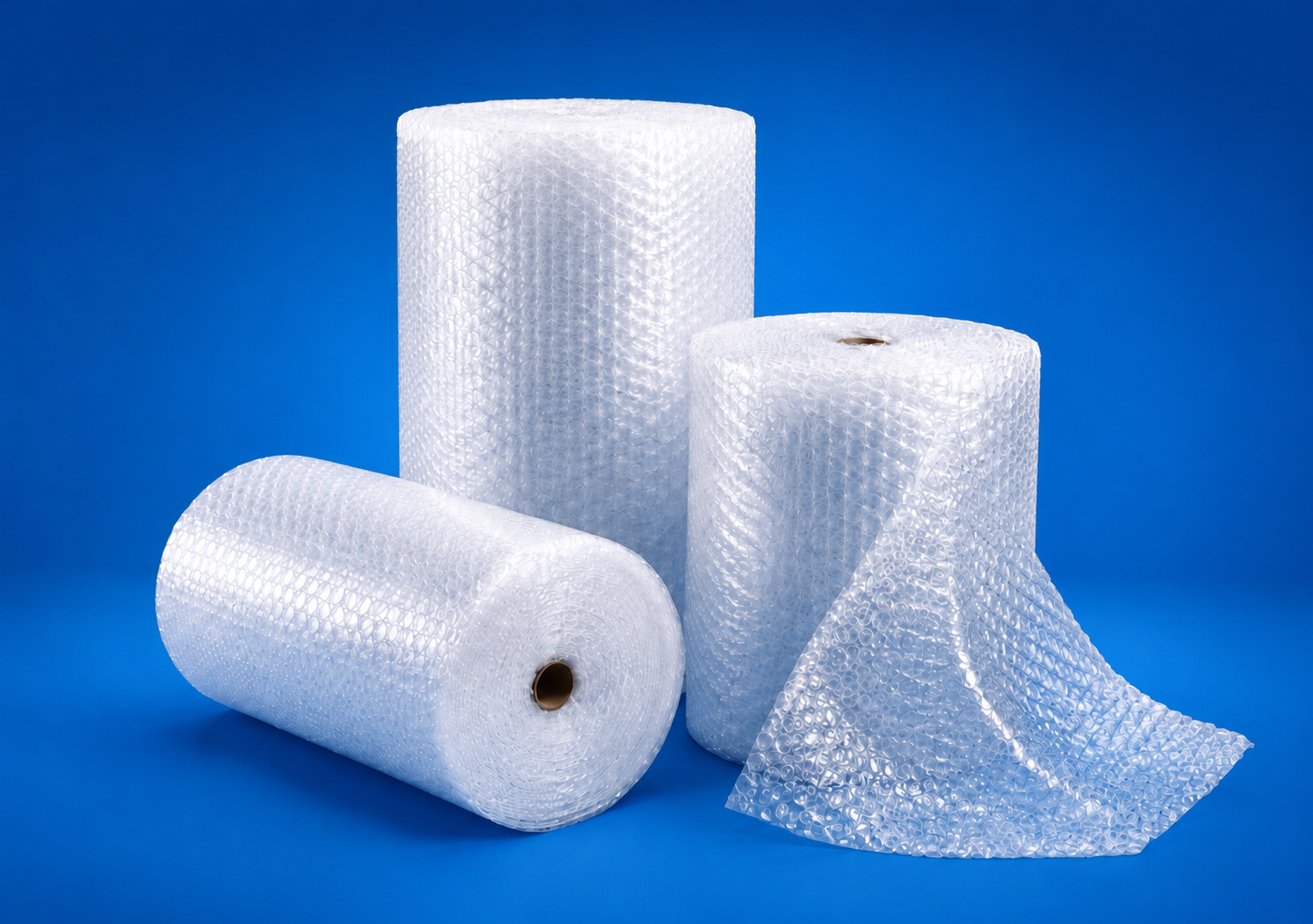
What Bubble Wrap Actually Does and What It Cannot Do
Bubble wrap or packaging bubble sheet as it’s often called in industrial procurement works by trapping air inside sealed polyethylene cells. When an impact occurs during transit, those cells compress and absorb the force rather than concentrating it on the product surface.
That protection mechanism is real and reliable within a specific performance envelope. Outside that envelope, bubble wrap fails quietly the boxes look fine on the outside, the damage is inside.
Two things determine whether your bubble wrap is inside or outside its performance envelope: bubble size and film gauge. Both need to match your product.
Understanding Bubble Sizes The Decision Most Buyers Skip
Small Bubble (10mm diameter):
Small-cell bubble wrap provides tight, uniform coverage that conforms well to irregular product surfaces. The smaller air volume per cell means less cushioning against heavy impacts, but better surface contact protection.
Best suited for:
- Glassware and ceramics
- Polished or painted surfaces prone to scratching
- Small, irregularly shaped items that need wrap coverage across contours
- Lightweight products where surface protection is the primary concern
Large Bubble (25–28mm diameter):
Large-cell bubble wrap traps significantly more air per cell. That air volume is what absorbs impact energy from drops and knocks which is why large-cell performs better for products being shipped through third-party logistics networks where handling is less controlled.
Best suited for:
- Heavier components and industrial parts
- Products shipped through courier sortation systems with multiple transfer points
- Items where cushioning against drops matters more than surface conformity
- Void fill inside oversized cartons where you need volume coverage efficiently
The practical rule: if your product weighs under 2kg and surface scratching is the primary risk, small bubble. Above 2kg, or when the transit route involves courier handling rather than dedicated transport, large bubble is the safer specification.
Film Gauge The Specification Detail Nobody Talks About
Bubble wrap is manufactured in different film thicknesses, typically ranging from 20 microns to 50 microns. The gauge affects burst resistance, tear strength, and how long the bubbles stay inflated under sustained load.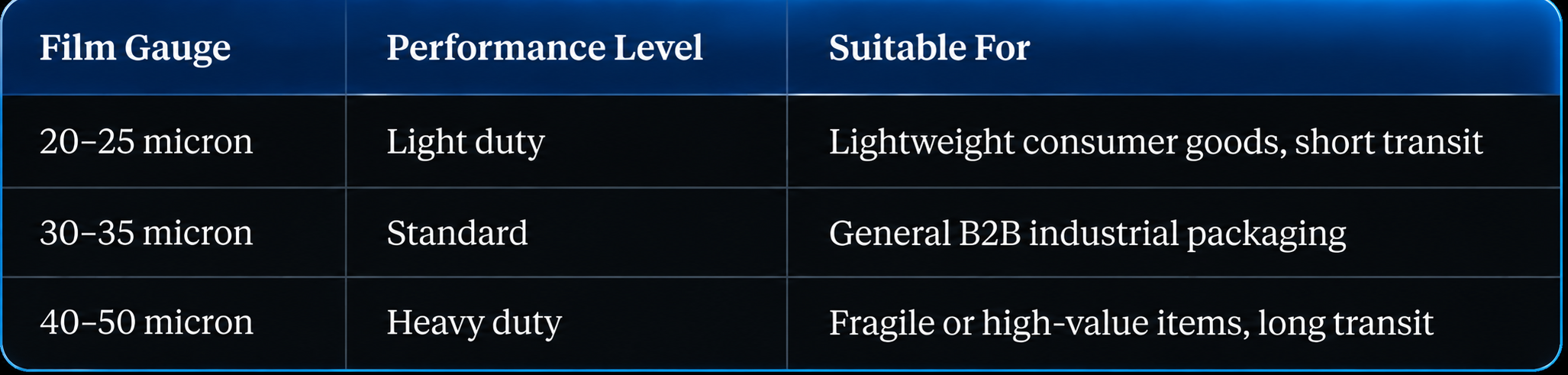
A 20-micron film tears at corners under normal handling pressure. If your packing line operators are pulling wrap quickly under production pressure, thin film fails before the product even reaches the carrier. Specify minimum 35 micron for any industrial B2B application.
Bubble Wrap Formats Roll vs Pre-Formed Bag
Both formats use the same base material. The choice is an operational decision, not a protection decision.
Air bubble rolls are cut to length at the workstation. One roll SKU can serve multiple product sizes, which simplifies inventory. For operations handling a mixed product range where sizes vary regularly, rolls are the more flexible specification.
Air bubble bags are pre-formed to specific dimensions and sealed on three sides. The operator drops the product in and seals the fourth side. Packing is faster and more consistent every unit gets the same coverage without depending on operator wrapping technique.
For high-volume packing lines where the same product ships in the same configuration repeatedly, air bubble bags from Ahmedabad manufacturers reduce packing time and produce more consistent protection across a shift.
Common Bubble Wrap Specification Mistakes
These errors appear consistently across Gujarat’s industrial packing operations:
- Specifying small-cell for heavy components: the cells bottom out under load and provide no cushioning by delivery
- Using thin-gauge film on a fast packing line: operators tear the wrap and reduce coverage without realising it
- Treating bubble wrap as the only layer: bubble wrap is inner packaging; the outer carton carries stacking load. Both need to be correctly specified.
- Not accounting for transit route: a dedicated vehicle delivery and a courier network delivery have very different handling profiles. The same product may need different specifications for each route.
- Reusing bubble wrap: once cells are compressed, they don’t fully recover. Reused bubble wrap has meaningfully lower cushioning performance than new material.
Why Choose Shanti Polymers:
Shanti Polymers Ahmedabad, Manufacturer of Air Bubble Roll Located in Sanand GIDC in Ahmedabad, Shanti Polymers makes air bubble rolls and bags and sells them to industrial packaging customers in Gujarat and across India. As a direct air bubble roll manufacturer in Ahmedabad, they control film gage, bubble size and seal quality throughout each production run with custom roll widths and bag dimensions available to suit specific production line requirements.
Their team works with you to determine the appropriate bubble size, film gage and format based on your product type, transit route and packing line set-up. Samples before we bulk order.