
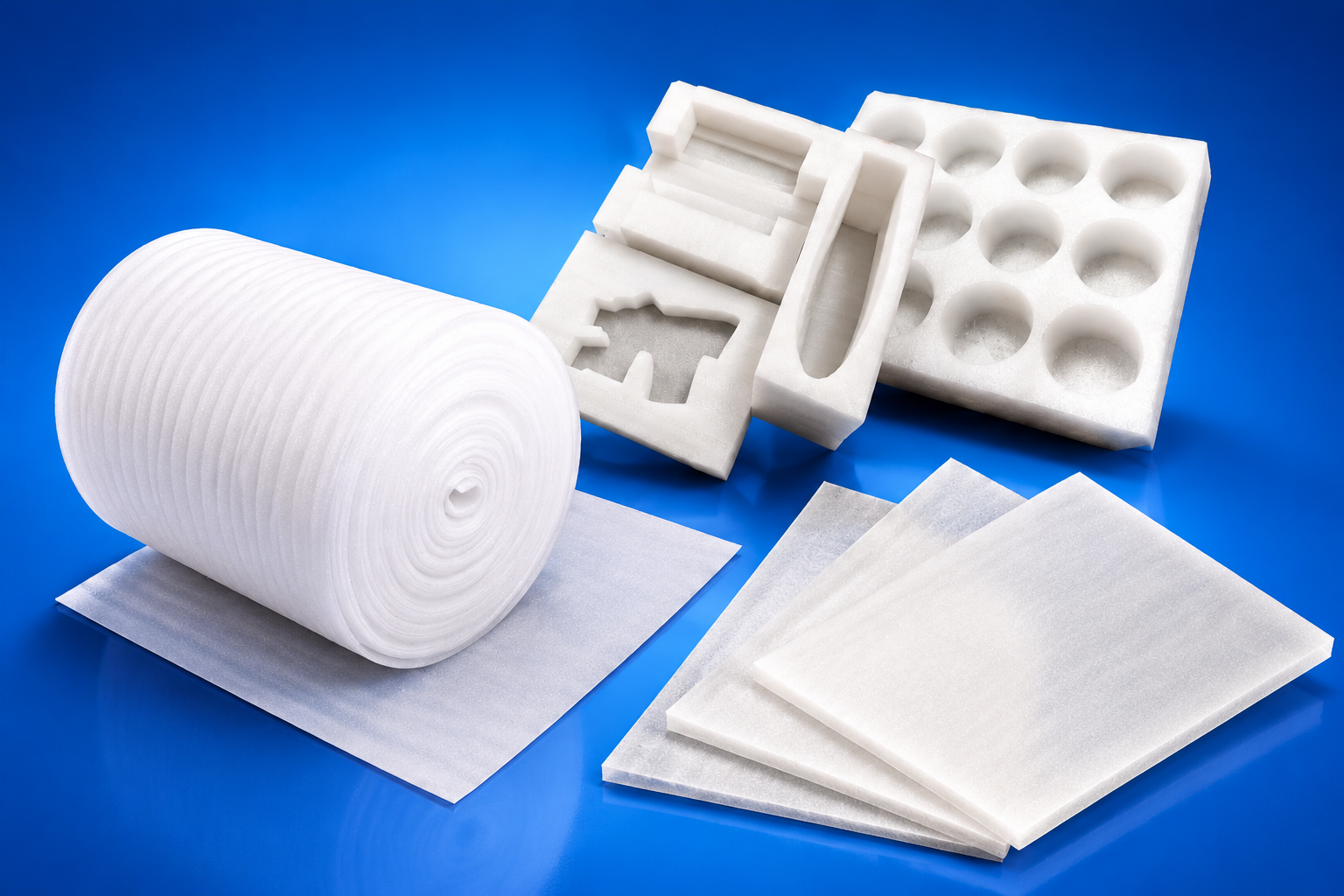
If you’re sourcing packaging for electronics, auto components, or precision parts, chances are EPE foam is already part of your supply chain. As an EPE foam fitment manufacturer in Ahmedabad, Shanti Polymers regularly fields questions from purchase managers about what happens to EPE foam after it’s done its job and whether recycling is actually practical at a factory level.
This guide answers that directly, without the fluff.
What Is EPE Foam Made Of?
EPE stands for Expanded Polyethylene. It is produced by expanding low-density polyethylene (LDPE) resin with a blowing agent to form a closed-cell structure containing trapped air, resulting in a lightweight, flexible and shock-absorbing material used in automotive, electronics, pharmaceutical and consumer goods packaging.
Because it’s made from a single polymer type polyethylene EPE foam is technically recyclable. It carries the resin identification. This is important when you’re deciding how to handle waste from your packaging line.
Yes, EPE Foam Is Recyclable But With Conditions
EPE foam can be recycled, but not through standard municipal or kerbside recycling. The foam must go to a facility equipped to process LDPE foam, which involves compression, granulation, and re-extrusion into raw material pellets.
A few practical realities for factory buyers:
- Contaminated foam is difficult to recycle: If your EPE fitments have adhesive labels, oil, or grease from components, they’ll likely be rejected at recycling facilities. Keep foam waste clean and segregated on the shop floor.
- Volume matters: Most recyclers in Gujarat and Maharashtra work on a minimum lot basis typically 200–500 kg. If your monthly foam waste is below this, find other manufacturers in your industrial zone willing to consolidate waste.
- Not all EPE is equal: ESD (antistatic) EPE foam contains conductive additives and should be handled separately from standard white EPE. Check with your recycler before mixing waste streams.
For most manufacturing units, the more practical first step is reuse before recycling returning EPE fitments to your supplier as part of a returnable packaging programme, or reusing them in internal material movement.
How EPE Foam Fitments Support a Circular Packaging Model
The longer sustainability conversation isn’t just about end-of-life recycling. It’s about how many cycles a packaging material completes before it becomes waste.
EPE foam fitments, when properly designed and handled, can complete 8–12 transit cycles before showing significant compression or deformation. This is a significant difference from single-use options. For captive supply chains where the same supplier delivers to the same factory repeatedly a structured returnable packaging system using EPE fitments inside PP corrugated boxes can eliminate foam waste almost entirely.
This model works especially well for automotive tier-1 and tier-2 suppliers in Gujarat, where components move between fixed points on a regular schedule.
What to Ask Your EPE Foam Fitment Manufacturer in Ahmedabad
If sustainability and material compliance are part of your procurement checklist, here are three questions worth asking any foam supplier:
- Can you provide the resin composition and polymer code?
A legitimate manufacturer should be able to confirm the LDPE grade and foaming agent used. This matters for your ISO 14001 documentation and waste disposal records.
- Do you offer returnable fitment programmes?
Not all manufacturers support take-back. Shanti Polymers works with clients on returnable loop designs where practical fitments come back with delivery vehicles and re-enter the supply chain.
- What density is appropriate for my application?
Density affects both protection performance and recyclability. Lower-density foam (15–18 kg/m³) compresses faster and has a shorter reuse life. Higher density (25–35 kg/m³) costs more upfront but delivers better longevity and better value per trip.
Why Choose Shanti Polymers?
Shanti Polymers manufactures EPE foam fitments in Ahmedabad facility, which means faster sampling, direct quality control, and no third-party margin. Their team works with purchase managers to match foam density, cavity design, and box specification to the actual component not a generic catalogue solution.
Making the Right Decision for Your Packaging Line
EPE foam is recyclable, reusable, and the most sustainable foam option currently available for B2B industrial packaging. The practical limitation is infrastructure India’s foam recycling ecosystem is growing but not yet uniformly accessible.
For most factories, the better near-term strategy is to extend the use life of each fitment through proper handling, invest in returnable packaging loops where your supply chain allows, and ensure foam waste is segregated and kept contamination-free for collection.
As a leading EPE foam fitment manufacturer in Ahmedabad, Shanti Polymers can advise on density selection, returnable loop design, and the right foam specification for your components whether you’re packaging PCBs, motor assemblies, or fragile consumer products.